
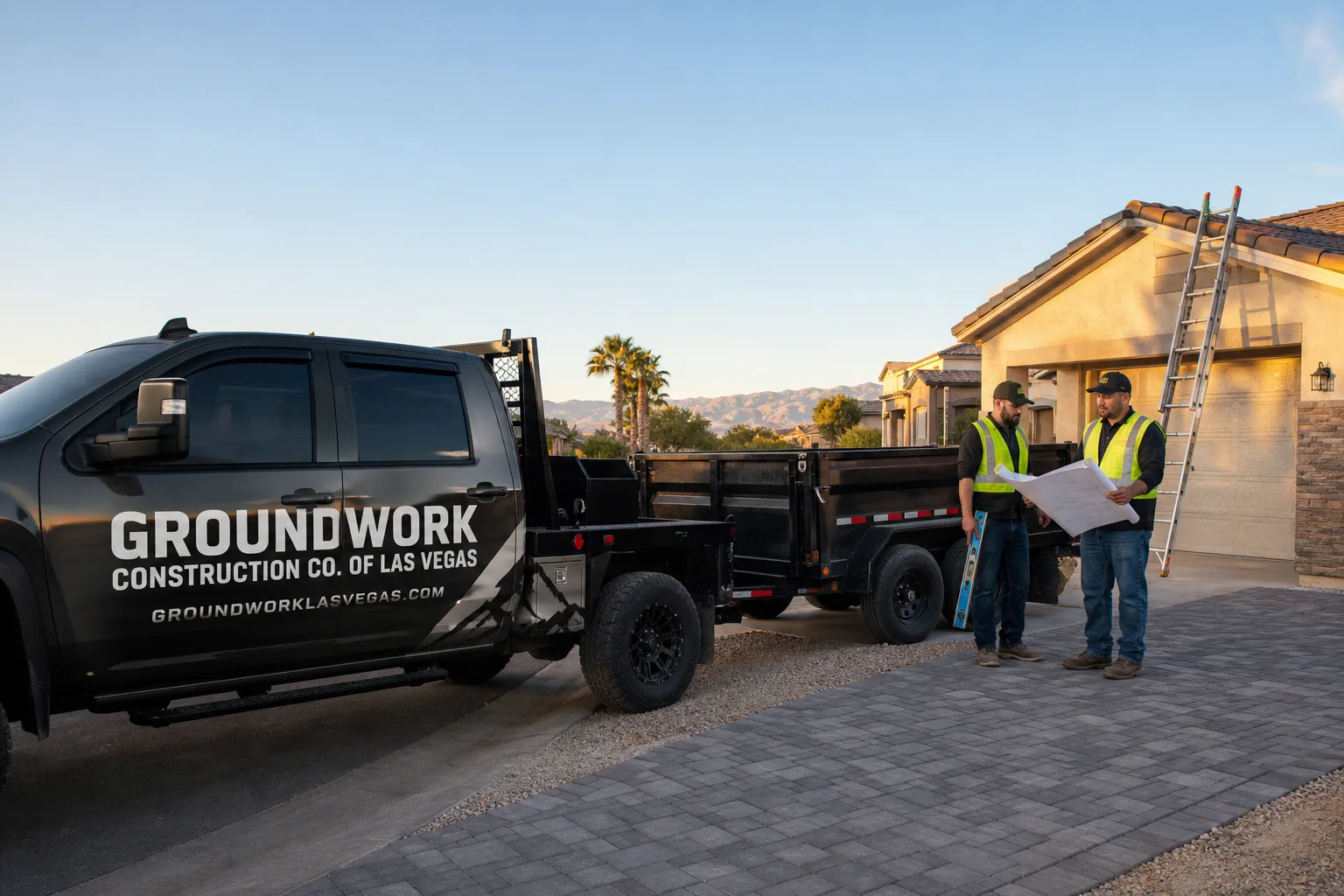
How Much Does Roof Repair in Moapa Cost, and How Fast Can We Get There?
Roof repair in Moapa typically runs $400-$1,800 and most jobs wrap in a single day. We stock common asphalt shingles, underlayment, and flashing on our Las Vegas trucks so we’re not waiting on I-15 deliveries. Call (855) 951-4361 and a live person will answer, 24/7 - we’ll usually have a technician on your property within 24 hours.
We’re talking about targeted fixes here: replacing wind-lifted shingles, resealing vent penetrations, patching valley leaks, or swapping out rotted decking in a discrete section. Not a full tear-off. The kind of work that stops water before it reaches your insulation, your rafters, your ceiling drywall. In Moapa’s manufactured-home-heavy housing stock, that timeline matters more than most places - water intrusion moves fast through thinner roof decks and less attic ventilation than you’d find in a stick-built suburban home.
How We Handle Roof Repair - Start to Finish
We’ve refined this into five clear stages so you know exactly where your money goes and what we need from you at each point.
Stage 1: On-site diagnosis (30-60 minutes)
Our technician walks the roof with you if you want to see what we see, or handles it solo if you’d rather stay inside out of the heat. We’re looking for active leaks, wind damage, granule loss, soft decking, and failed flashing. In Moapa, we also check for UV-brittled sealant around HVAC curbs and swamp cooler penetrations - the Mojave sun cooks that stuff faster here than in most Nevada markets. You’ll get a written estimate before we touch a tool.
Stage 2: Material pull and staging (same day or next morning)
Most repairs use standard architectural shingles in common earth tones - we carry GAF and Owens Corning stock on our Las Vegas trucks. If your roof needs a specialty color or discontinued profile (common on 1990s manufactured homes), we source from our North Las Vegas supplier and schedule for the following day. You decide: match existing as close as possible, or use this repair as a transition point toward a future full roof replacement.
Stage 3: Tear-out and prep (2-4 hours)
We remove damaged shingles, cut out rotted decking, and expose the framing for inspection. Here’s where Moapa’s housing stock gets specific: manufactured home roof decks are often 3/8″ OSB over 2×4 trusses at 24″ centers, not the 1/2″ plywood you’d find on a stick-built ranch. We carry both thicknesses so we’re not making a second trip. Any structural compromise gets photographed and discussed before we proceed - no surprises, no open-ended change orders.
Stage 4: Repair and weatherproofing (3-6 hours)
New decking goes in, followed by synthetic underlayment on exposed sections, ice-and-water shield in valleys and penetrations, then shingles, ridge cap, and sealant. We run a water test on flat or low-slope sections before we pack up. In summer, we start this stage at dawn - Moapa’s 115°F afternoons make asphalt shingles too pliable to handle cleanly, and the adhesive strips won’t set properly on superheated decking.
Stage 5: Cleanup and documentation (30 minutes)
Magnetic sweep of the yard, final photos for your records, and a walkthrough if you’re home. Your 730-Day Done Right Promise paperwork gets emailed same day. If this repair is part of a full Roofing in Moapa project down the road, we note the shingle batch and color code for seamless matching later.
The Repair Choices You’ll Actually Make
Most homeowners think roof repair is “fix the leak, here’s the bill.” There’s more to decide than that, and the trade-offs are real:
- Patch vs. section replacement: A 3×5′ patch costs less today but leaves you with mismatched shingle aging. A full slope or face replacement runs higher but gives uniform weathering and simplifies matching if you replace the whole roof in 5-7 years. On manufactured homes with 12-15 year shingle life, we often recommend the larger section.
- Standard vs. synthetic underlayment: Felt paper is cheaper and fine for quick patches. Synthetic underlayment breathes better and lasts longer if your attic ventilation is marginal - common in older Moapa stick-built homes with gable vents but no ridge vent. Worth the $80-$150 upcharge for peace of mind.
- Three-tab vs. architectural shingles: Three-tab matches most 1990s-2000s manufactured home roofs and costs less per square. Architectural shingles carry longer warranties and handle wind better, but the dimensional profile can look “thick” on a low-slope manufactured home roof. We show you both laid out on the ground before you choose.
- Decking material: OSB is what came on your manufactured home and it’s what insurers expect. Plywood handles moisture better long-term but costs 30-40% more per sheet. If this isn’t your first leak in that spot, plywood’s worth considering.
- Sealant grade: Standard roofing cement works for most flashing repairs. Polyurethane or silicone-based sealants hold up better on metal flashing and HVAC curbs in extreme UV. We use the better stuff on south- and west-facing penetrations without upselling you everywhere else.
Serving Moapa, NV - Our Local Coverage Area
We’re based in the Moapa area and know this community well. Use the map below to see our service coverage - if you’re nearby, we can almost certainly help.
What Roof Repair Costs in Moapa, NV
Our roof repair jobs in the Moapa Valley basin run $400 on the low end for simple shingle replacement or flashing reseal, up to $1,800 for multi-section decking replacement with full underlayment and architectural shingles. Here’s what pushes you toward either end:
| Cost Driver | Low-End Scenario
Why Moapa Chooses Groundwork Construction Co. of Las VegasWe set the standard for roof repair in Moapa. No Change-Order SurprisesThe written quote you sign is the price you pay. Anything we find mid-job gets priced and approved by you in writing before we touch it. Licensed & InsuredFully certified technicians who meet all local and state licensing requirements. Upfront PricingNo hidden fees, no surprises. You approve the price before any work begins. Guaranteed WorkEvery repair and installation is backed by our workmanship warranty and satisfaction guarantee. How It Works in MoapaGetting your roof repair handled is simple and fast. 1 Call or Request a Free EstimateTell us about your roof repair needs and we provide an upfront, transparent quote - no obligation, no hidden fees. 2 Licensed Technician DispatchedA background-checked, certified technician arrives in Moapa - typically within 30-60 minutes, with parts stocked on the truck. 3 Problem Solved, GuaranteedWe complete the job to your full satisfaction, backed by our warranty and 100% satisfaction guarantee. What happens when you call
What Moapa Customers SayTrusted by homeowners across Moapa and surrounding areas. ★★★★★ "He told me one part of what I wanted was a bad idea structurally and offered an alternative instead of just taking the money." ★★★★★ "Found unpermitted work by the previous owner once he opened the wall. He stopped, explained the options and what each would cost, and let me decide rather than making it my emergency." ★★★★★ "We lived in the house through the whole thing. He kept the dust wall up, cleaned every Friday, and made sure we always had a working bathroom." Our Work in MoapaA look at recent construction projects across Moapa and surrounding areas. Ready for Roof Repair in Moapa?Call now for a free estimate - or request one below. Licensed, insured, and here with fast after-hours help in Moapa. (855) 951-4361Request a Free Estimate in MoapaTell us about your roof repair needs - we'll respond within the hour. Prefer to text? Text Us Areas We Serve
|
|---|