
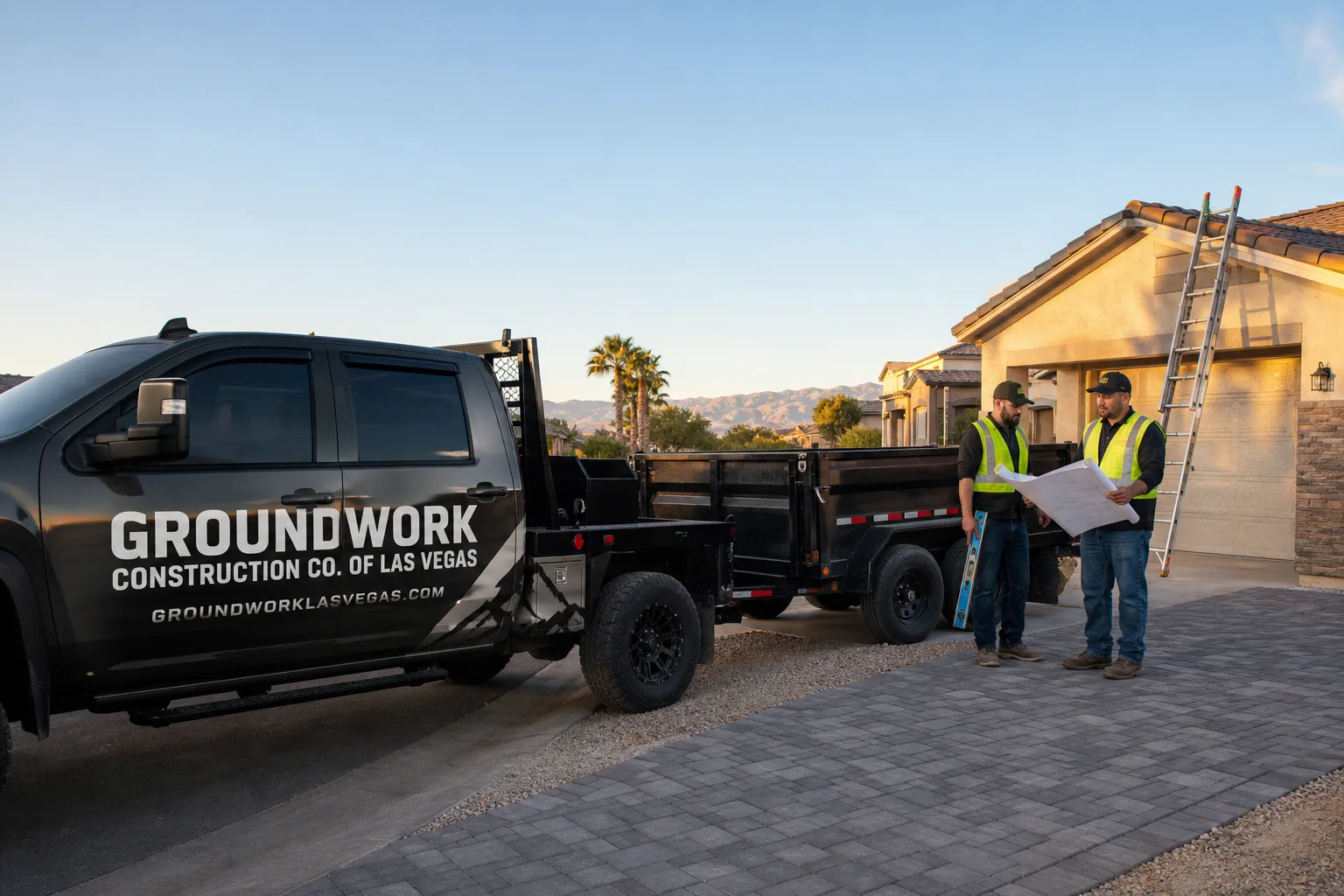
Tile Roofing in Coyote Springs, NV: Timeline, Cost, and What to Expect
Tile roofing in Coyote Springs typically runs $8,000-$20,000 for a full installation, with most residential jobs taking 5-8 working days from tear-off to final inspection. We’re working with clay and concrete tile systems rated for extreme desert UV and thermal cycling, which is non-negotiable in a valley that sees 110°F-plus summer days and near-zero humidity. Call (855) 951-4361 for a free on-site estimate - our roofing crew covers all of Coyote Springs and the surrounding master-planned parcels.
How We Handle a Tile Roofing Job from Start to Finish
Every tile roof we install in Coyote Springs follows a five-stage sequence. The homeowner makes real decisions at three of them, so we build in time for you to think, not just react.
Stage 1: Site survey and structural assessment (Day 1)
We walk the roof plane, measure live load capacity, and photograph the existing deck and fascia condition. Tile weighs 600-1,100 pounds per square (100 sq ft), so we verify your framing can handle it - or we specify where reinforcement is needed. If this is part of a full Roofing in Coyote Springs project, we coordinate that scope now. You get the structural report same day.
Stage 2: Material selection and ordering (Days 2-4)
We don’t keep tile in a Coyote Springs warehouse - nobody does, given the haul distance from Las Vegas suppliers. You choose between clay and concrete profiles (see next section), we confirm color lots, and we schedule delivery to beat your install date by 48 hours. Lead time here is usually 3-5 business days. Your decision: profile, color, and whether to upgrade the underlayment to a double-layer system.
Stage 3: Tear-off and deck prep (Days 5-6)
Existing roofing comes off to bare deck. We replace any water-damaged plywood, re-nail the deck to current wind uplift standards, and install drip edge. In Coyote Springs, we also spec hot-dipped galvanized fasteners - standard electro-galvanized hardware corrodes faster in this alkaline desert soil and airborne dust environment. This stage generates the most debris; we haul same-day.
Stage 4: Underlayment and tile install (Days 7-10)
We lay ASTM D226 Type II felt or a synthetic underlayment (your choice, price difference noted below), then set battens if the profile requires them. Tile goes on in sections, starting at the eaves and working up. Valley metal, hip and ridge caps, and vent flashing follow. A 2,500-square-foot roof with moderate complexity takes about four working days at this stage.
Stage 5: Inspection, cleanup, and walkthrough (Day 11)
We pull the permit inspection, correct any punch-list items on the spot, and do a magnetic sweep for fasteners. You walk the finished roof with our lead technician. The 730-Day Done Right Promise documentation gets emailed before we leave. Most Coyote Springs jobs complete in a single visit, but we schedule a 6-month follow-up to check expansion joints after the first full summer of thermal cycling.
The Tile Options You’ll Actually Choose Between
- Clay S-tile or Spanish tile: The classic profile, 70-100 years of service life, and excellent UV resistance. Runs heavier (900-1,100 lbs/square) and costs more. Best for homeowners who plan to hold the property long-term and want the authentic look. In Coyote Springs, we specify a lighter terracotta or sand color to reflect heat - dark glazes absorb too much thermal energy.
- Concrete flat or low-profile tile: Half to two-thirds the cost of clay, 600-900 lbs/square, and available in more colors. The trade-off is a 40-60 year lifespan and slightly higher water absorption, which matters less in our near-zero-rainfall climate but still affects freeze-thaw if you’re at higher elevation parcels. We use this on most spec builds in the area.
- Lightweight concrete composite: 500-700 lbs/square, designed for re-roofs where the existing structure can’t take full-weight tile without costly reinforcement. Costs land between standard concrete and clay. Lifespan is 30-50 years. We recommend this when we’re called in to upgrade a builder-grade asphalt roof on an existing Coyote Springs home that wasn’t originally designed for tile loading.
- Underlayment grade: Single-layer ASTM D226 Type II felt is standard and code-compliant. Double-layer or synthetic underlayment (like CertainTeed DiamondDeck) adds $800-$1,500 to a typical job but buys you a secondary water barrier if wind-driven rain ever penetrates the tile - rare here, but not impossible during summer monsoon bursts. We push this upgrade on low-slope pitches below 4:12.
- Batten vs. direct-to-deck: Most profiles need pressure-treated battens for airflow and drainage. Direct-to-deck systems exist but limit your tile choices and void some manufacturer warranties in high-heat zones. We default to battens unless the structure or HOA spec demands otherwise.
James Hardie doesn’t manufacture roof tile, but we specify their fiber-cement siding and trim on many Coyote Springs whole-home exteriors where tile roofing is paired with a full envelope upgrade. The color stability and fire rating complement a Class A tile assembly.
What Tile Roofing Costs in Coyote Springs, NV
| Component | Price Range |
|---|---|
| Tile Roof Replacement (full) | $8,000 - $20,000 |
| Tile Roof Repair (localized) | $600 - $2,500 |
| Structural reinforcement (if needed) | $1,500 - $5,000 |
| Double-layer underlayment upgrade | $800 - $1,500 |
| Clay tile material premium over concrete | +30% - +50% |
Five variables move your number within those ranges. Roof size and pitch are the biggest - a 4,000-square-foot roof with multiple hips and valleys takes nearly double the labor of a simple gable. Existing deck condition determines how much plywood we replace; moisture intrusion from prior leaks is more common on homes that sat partially completed through the 2008-2012 stall period. Structural reinforcement adds cost only when the original truss design didn’t account for tile loading - we see this on some early-build golf-course homes that were spec’d for lightweight composite. Material grade (clay vs. concrete vs. lightweight composite) shifts material costs by 30-50%. And access and haul distance in Coyote Springs is real - we’re 60+ miles from Las Vegas supply houses, so freight and crew mobilization run higher than a comparable job in Summerlin or Henderson.
Our written estimate includes tile, underlayment, fasteners, flashing, permits, haul-off, and the 730-Day Done Right Promise. It does not include gutter replacement (though we inspect and note condition), structural engineering if your plans require stamped drawings, or HOA architectural review fees. Upfront pricing, no surprises - the number you see is the number you pay.
What Coyote Springs Specifically Does to a Tile Roofing Job
Coyote Springs isn’t like other Nevada markets. The Harvey Whittemore master plan approved hundreds of thousands of residential units, but the 2008 financial crisis left most of that as undeveloped Mojave desert. What got built - the golf course, the clubhouse, a scattering of rural parcels and early homes - sits on raw greenfield with no existing neighborhood infrastructure to work around.
For tile roofing, this means three practical realities. First, material haul is extreme. We’re pulling tile, underlayment, and accessories from Las Vegas supply chains, 60-plus miles over I-15 and NV-168. Contractors who bid Coyote Springs jobs using standard metro freight assumptions eat the difference or cut corners on material quality. We build the actual freight cost into our estimate and specify the delivery window in writing.
Second, the housing stock that does exist is almost entirely post-2000s, built to Nevada’s energy codes for extreme desert climate but not necessarily designed for tile loading. We’ve worked on homes where the original builder spec’d asphalt shingle to hit a price point, and the homeowner now wants tile for longevity and fire rating. That often requires truss reinforcement or engineered solutions - we flag it during the Stage 1 survey, never after tear-off.
Third, the thermal environment here is harsher than Las Vegas proper. The valley floor exceeds 110°F regularly in July and August, with nighttime drops of 30-40 degrees. That thermal cycling stresses expansion joints, underlayment adhesion, and sealant flexibility more severely than urbanized areas with heat-island moderation. We specify high-temp-rated sealants and wider expansion joint spacing than manufacturer minimums for lower-elevation installs. The caliche hardpan layer, that rock-hard calcium carbonate crust inches below the surface, doesn’t directly affect roofing but it’s part of why foundation and structural work in Coyote Springs costs more - and why we verify load capacity before we ever order tile.
There’s virtually no legacy housing stock here, no 1970s tract homes with asbestos shingles or worn cedar shakes. Every tile roof we install in Coyote Springs is either new construction to current code or an upgrade on a relatively recent build. The failure modes we see aren’t age-related - they’re installation-related, from contractors who didn’t account for UV degradation on exposed underlayment or who used standard-grade fasteners in an alkaline dust environment.
Serving Coyote Springs, NV - Our Local Coverage Area
We’re based in the Coyote Springs area and know this community well. Use the map below to see our service coverage - if you’re nearby, we can almost certainly help.
Frequently Asked - Tile Roofing in Coyote Springs
Most residential tile roofing jobs take 5-8 working days from tear-off to final inspection, with another 3-5 days for material delivery from Las Vegas suppliers. Complex roofs with multiple hips and valleys, or jobs requiring structural reinforcement, can stretch to 12-14 days. Call (855) 951-4361 and we’ll give you a firm timeline with your estimate - no guesswork.
Yes. Lincoln County requires a building permit for any roof covering replacement, and tile roofing triggers a structural review because of the added weight. We pull the permit, schedule inspections, and handle corrections - it’s included in our project management. The process typically adds 2-3 business days to the front end.
Only if your original structural plans were engineered for tile loading, which we verify during the Stage 1 survey. Most post-2000s Coyote Springs homes built with asphalt shingle spec will need some reinforcement - often sistering rafters or adding collar ties. We never install tile over a deck that can’t handle it; that’s a failure waiting to happen, and it voids our 730-Day Done Right Promise.
Tile lasts 40-100 years versus 15-25 for asphalt in extreme UV, and it carries a Class A fire rating that matters in high-fire-risk desert interface zones. The upfront cost is 2-3x, but amortized over the lifespan it’s competitive. For Coyote Springs homeowners planning to hold the property 15-plus years, we generally recommend tile. For shorter holds or rental properties, a high-grade asphalt or composite may make more sense.
Our 730-Day Done Right Promise covers all workmanship - if it’s not done right, we make it right, one of the longest guarantees in residential construction. Manufacturer warranties on the tile itself run 50 years (clay) or 30-50 years (concrete), and we register those in your name at completion. The double-layer underlayment upgrade carries its own 30-year warranty from the manufacturer. Everything’s backed in writing, not verbal.
Get Your Free Tile Roofing Estimate in Coyote Springs
Call (855) 951-4361 and you’ll reach a live person, 24/7 - no voicemail, no waiting until Monday. We’ll schedule a free on-site estimate at your Coyote Springs property, walk the roof with you, and deliver a written quote with upfront pricing and no surprises. Ask about our $1,000 off projects over $10,000 and 0% financing for 18 months when we meet. Built to last, backed in writing.
Written by Todd Mervyn, Owner at Groundwork Construction Co., serving Coyote Springs and the Las Vegas valley since 2014.