
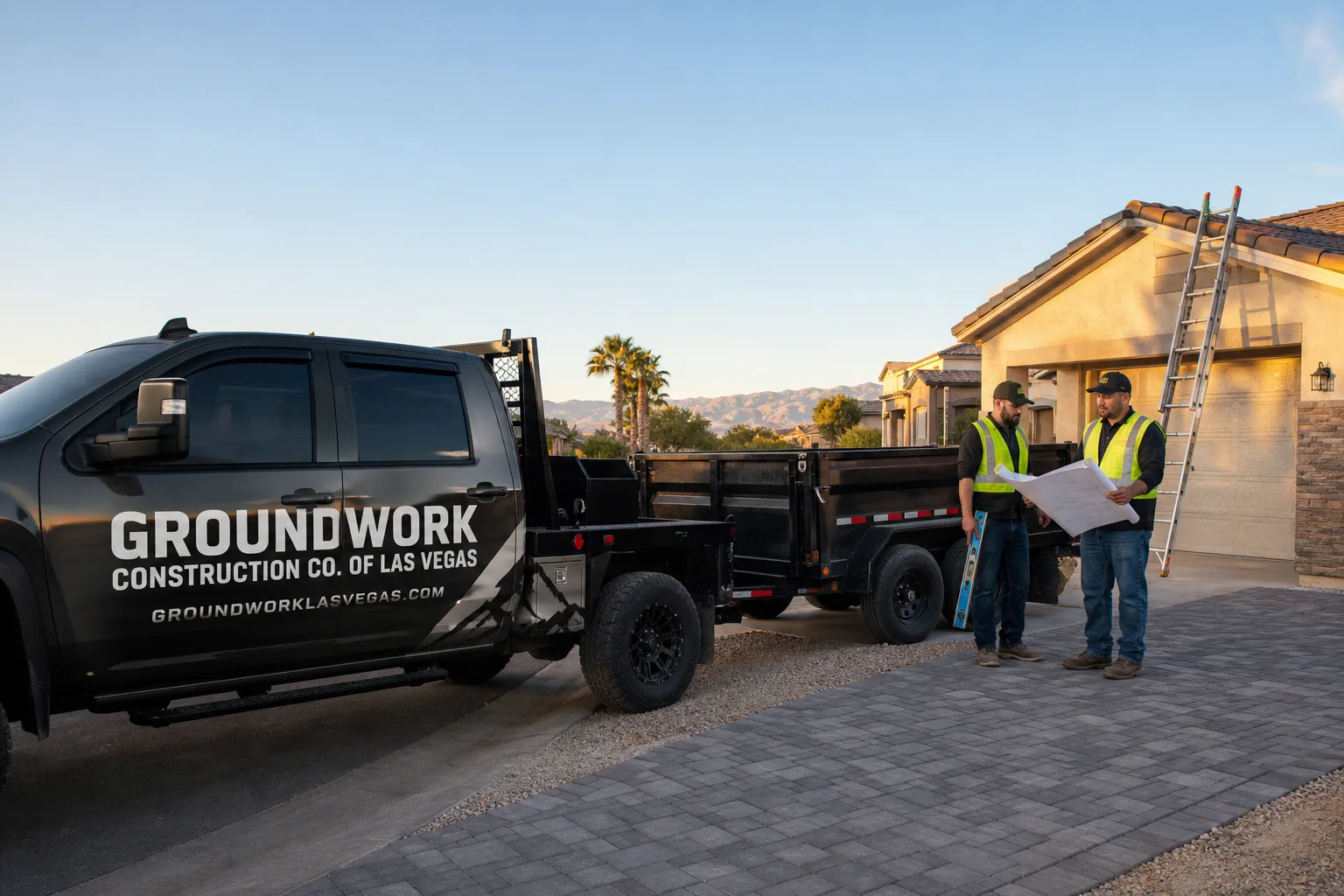
What Does Specialty Roofing Cost and Include in Spring Valley?
Specialty roofing in Spring Valley covers non-standard installations like steep-pitch architectural designs, integrated solar-ready systems, cool-roof coatings on complex geometries, and custom flashing for additions that tie into existing 1970s-1990s tract-home rooflines. Most projects run $8,000-$20,000 for full replacement scope, with targeted specialty repairs starting around $400-$1,800. Call (855) 951-4361 for a free on-site estimate - we answer live, 24/7.
Spring Valley’s housing stock presents a specific challenge: thousands of homes built during the Las Vegas suburban boom sit under original or second-generation roofs with shallow pitches, minimal overhangs, and stucco transitions that trap heat. When homeowners want something better than a basic reskin - whether that’s a standing-seam profile, a tile conversion, or a cool-roof system that actually handles our 110°F summers - the job crosses into specialty territory fast. That’s where standard roofing crews often stall out and where we focus our expertise.
How We Handle Specialty Roofing From First Call to Final Walkthrough
We’ve refined this into five clear stages so you know what’s happening and when you need to make decisions.
Stage 1: Structural and Thermal Assessment - 2 to 4 hours on-site
We start with a full attic inspection if accessible, thermal imaging to find insulation gaps, and a pull on your existing roof’s sheathing condition. In Spring Valley, we regularly discover original 1980s plywood that’s cooked through from decades of attic temperatures exceeding 150°F. You’ll decide here whether we replace sheathing sectionally or across the full plane - this choice alone can shift your timeline by a full day and your cost by $800-$2,400.
Stage 2: Design and Material Lock - 1 to 3 days
We bring samples, not catalogs. You’ll handle actual GAF or CertainTeed product, compare cool-roof reflective ratings (SRIs above 25 qualify for NV Energy rebates), and settle on trim profiles that work with your stucco transitions. For complex geometries - turrets, multiple intersecting planes, or additions tied to original rooflines - we produce a scaled flashing plan. Your decision point: material grade and whether to integrate solar conduit paths now or retrofit later.
Stage 3: Prep and Protection - 1 day
We tarp landscape, set catch scaffolding for tight Spring Valley setbacks, and stage materials for alley or driveway loading. Many of your neighbors have zero side-yard clearance, so we coordinate crane drops or manual carry based on access. If your project is part of a full Roofing in Spring Valley overhaul, we sequence this with window and door work to minimize scaffolding rental days.
Stage 4: Installation - 2 to 5 days depending on complexity
Standard tear-off and reskin takes a day or two. Specialty work extends this: custom valley weaving on multi-plane roofs, precision-cut tile on steep pitches, or applied cool-roof coatings requiring specific humidity and temperature windows. We never pour coating when ambient temps exceed 95°F - it skins before it bonds. In July and August, that means 5:00 a.m. starts, which our crews are accustomed to.
Stage 5: Inspection and Documentation - Same day as completion
We photograph the full installation, register your GAF or CertainTeed warranty, and walk the roofline with you. The 730-Day Done Right Promise begins now - if it’s not done right, we make it right.
The Material and System Choices You’ll Actually Decide Between
Specialty roofing isn’t about picking a color. These are the structural and performance forks that determine how your roof behaves for the next 25 years:
- Cool-roof shingles vs. standard architectural: Cool-roof versions cost 15-20% more upfront but drop attic temperatures 20-40°F and qualify for utility rebates. In Spring Valley, where summer cooling loads crush budgets, the payback is 4-6 years. Standard architectural shingles save money now but cook your top floor.
- Full synthetic underlayment vs. felt: Synthetic runs $0.35-$0.60 more per square foot but survives our monsoon wind-driven rain and won’t degrade if exposed during a multi-day install. Felt is cheaper; in our climate, it’s a false economy.
- Custom metal valley flashing vs. woven shingles: Metal valleys add $400-$800 per intersection but handle the debris load from our desert windstorms without channeling water into your fascia. Woven valleys work on simple roofs; complex Spring Valley geometries with multiple dormers or additions need metal.
- Integrated solar conduit paths vs. surface-mounted later: Running conduit during roofing costs $600-$1,200. Retrofitting after the fact means penetrations, sealant maintenance, and potential leak paths. If solar is even a 50% probability, we advise doing it now.
- GAF Timberline HDZ vs. CertainTeed Landmark Pro: Both carry 50-year limited warranties. GAF’s LayerLock speeds install on steep pitches; CertainTeed’s dual-layer construction tolerates our thermal expansion cycles slightly better. We stock both and recommend based on your specific roof geometry, not brand loyalty.
What Specialty Roofing Costs in Spring Valley, NV
| Scope | Price Range | Typical Timeline |
|---|---|---|
| Specialty repair (custom flashing, partial re-sheathing) | $400-$1,800 | 1 day |
| Mid-complexity specialty reskin (cool-roof, complex geometry) | $8,000-$14,000 | 3-4 days |
| High-complexity full specialty replacement | $14,000-$20,000 | 5-7 days |
Five variables push you toward the high or low end of these ranges:
Existing sheathing condition: Original 1980s plywood in Spring Valley attics often fails the “screw pull” test. Sectional replacement adds $800-$2,400; full replacement doubles that.
Roof geometry complexity: Every additional plane, valley, or dormer adds labor hours and waste factor. A simple gable is at the low end; a 1970s tri-level with multiple additions sits at the high end.
Material grade and coating systems: Entry cool-roof shingles vs. premium SRI-40+ systems can separate by $3,000-$5,000 on a 2,500-square-foot roof.
Access constraints: Zero-lot-line homes common in Spring Valley’s denser tracts may require manual carry or crane rental - $400-$1,200 added.
Permit and inspection scope: Clark County requires structural review for any sheathing replacement exceeding 25% of roof area. Full replacement triggers this automatically; partial repairs may not.
Our written estimates include tear-off, disposal, sheathing inspection and replacement as needed, underlayment, shingles, flashing, ventilation balance, and permit fees. What’s typically separate: solar panel installation, gutter replacement (though we handle that too), and any interior drywall repair from prior leaks.
Why Spring Valley Homes Turn Standard Roofing Into a Specialty Job
The houses here tell a specific story. Most of Spring Valley’s residential core - the tracts between Flamingo Road and Spring Mountain Road, west of Decatur - went up fast between 1975 and 1995 on post-tension slabs poured over caliche hardpan. Those slabs are stable enough, but the rooflines above them were built to a price point: shallow pitches, minimal ventilation, and stucco parapets that terminate right at the roof edge with no meaningful overhang.
What fails first? The thermal cycling gets everything. Daily summer temperature swings of 40°F+ between peak afternoon and midnight stress every sealant joint, every nail penetration, every stucco-to-flashing transition. We see this constantly in neighborhoods like the original Spring Valley Country Club area and the tracts off Hualapai Way: stucco cracking at the roofline that looks cosmetic but channels monsoon water straight into the wall cavity. Standard roofing crews caulk and move on. We cut back stucco, install proper kickout flashing, and rebuild the transition - that’s specialty work born from local failure patterns.
The post-tension slab issue matters for roofing too. When homeowners add square footage - a master suite pop-out, a covered patio - the new roof has to tie into the old at precisely the right elevation. Cut too low and you create a ponding area; too high and you force water backward under the existing shingles. We carry cable-locating equipment as standard on any job that involves structural modification near the slab edge. An out-of-state crew wouldn’t think to bring it. In Spring Valley, it’s how we avoid a catastrophe that could release thousands of pounds of stored cable tension.
Permitting through Clark County is straightforward for straightforward reskins. Cross into structural modification, cool-roof rebate documentation, or solar-ready certification, and the inspection sequence extends. We handle the submittals and coordinate the sequence so you’re not chasing inspectors between our work and the county office on Grand Central Parkway.
Serving Spring Valley, NV - Our Local Coverage Area
We’re based in the Spring Valley area and know this community well. Use the map below to see our service coverage - if you’re nearby, we can almost certainly help.
Frequently Asked - Specialty Roofing in Spring Valley
Most specialty roofing jobs in Spring Valley take 3 to 5 days from tear-off to final inspection. Complex geometries, full sheathing replacement, or cool-roof coating applications that require specific temperature windows can extend to 7 days. Call (855) 951-4361 and we’ll give you a firm timeline with your estimate - no guesswork.
Yes, if your project involves sheathing replacement exceeding 25% of roof area, any structural modification, or cool-roof rebate eligibility documentation. Clark County issues the permit; we handle the application, plans, and inspection scheduling as part of our standard process. Simple repairs under that threshold may not require permitting - we’ll tell you upfront which category your job falls into.
In most cases, yes. Specialty roofing focuses on the envelope above your ceiling plane, not the systems below it. The exception: if your project includes adding solar conduit paths or modifying ventilation that intersects with existing HVAC ducting. We map these conflicts during our Stage 1 assessment and flag any necessary coordination before work begins.
Standard replacement swaps like for like on a simple geometry. Specialty roofing addresses complex planes, thermal performance upgrades, custom flashing for stucco transitions, and integration with additions or solar - the situations where a basic crew’s experience runs out. In Spring Valley, the combination of 1970s-1990s construction, extreme heat, and monsoon exposure means many homes that look “standard” actually need specialty attention to last.
Our 730-Day Done Right Promise covers all workmanship - if it’s not done right, we make it right, period. Material warranties run 25-50 years depending on your shingle selection (GAF and CertainTeed both offer transferable limited warranties). The two overlap: material defects are manufacturer-covered; installation quality is our responsibility for two full years, one of the longest guarantees in residential construction.
Ready to Talk Through Your Roof?
Specialty roofing in Spring Valley demands more than shingles - it takes a crew that understands post-tension slabs, caliche substrate, and what 110°F does to a roofline over forty years. Our Roofing team serves Spring Valley and surrounding Las Vegas Valley communities with upfront pricing, no surprises, and the 730-Day Done Right Promise backing every project. Homeowners often pair roof work with Sliding & Patio Doors in Spring Valley or Glass Railing Systems in Spring Valley for full exterior upgrades - ask about bundling during your estimate.
Call (855) 951-4361 now. A live person answers 24/7, and we’ll schedule your free on-site estimate at a time that works around your schedule. Todd Mervyn will review your assessment personally, and you’ll have a written quote with real numbers before we leave.
Written by Todd Mervyn, Owner at Groundwork Construction Co., serving Spring Valley since 2014.